
May 18, 2026
Inside a Colorado TPO Flat Roof Install: From Decking to Watertight
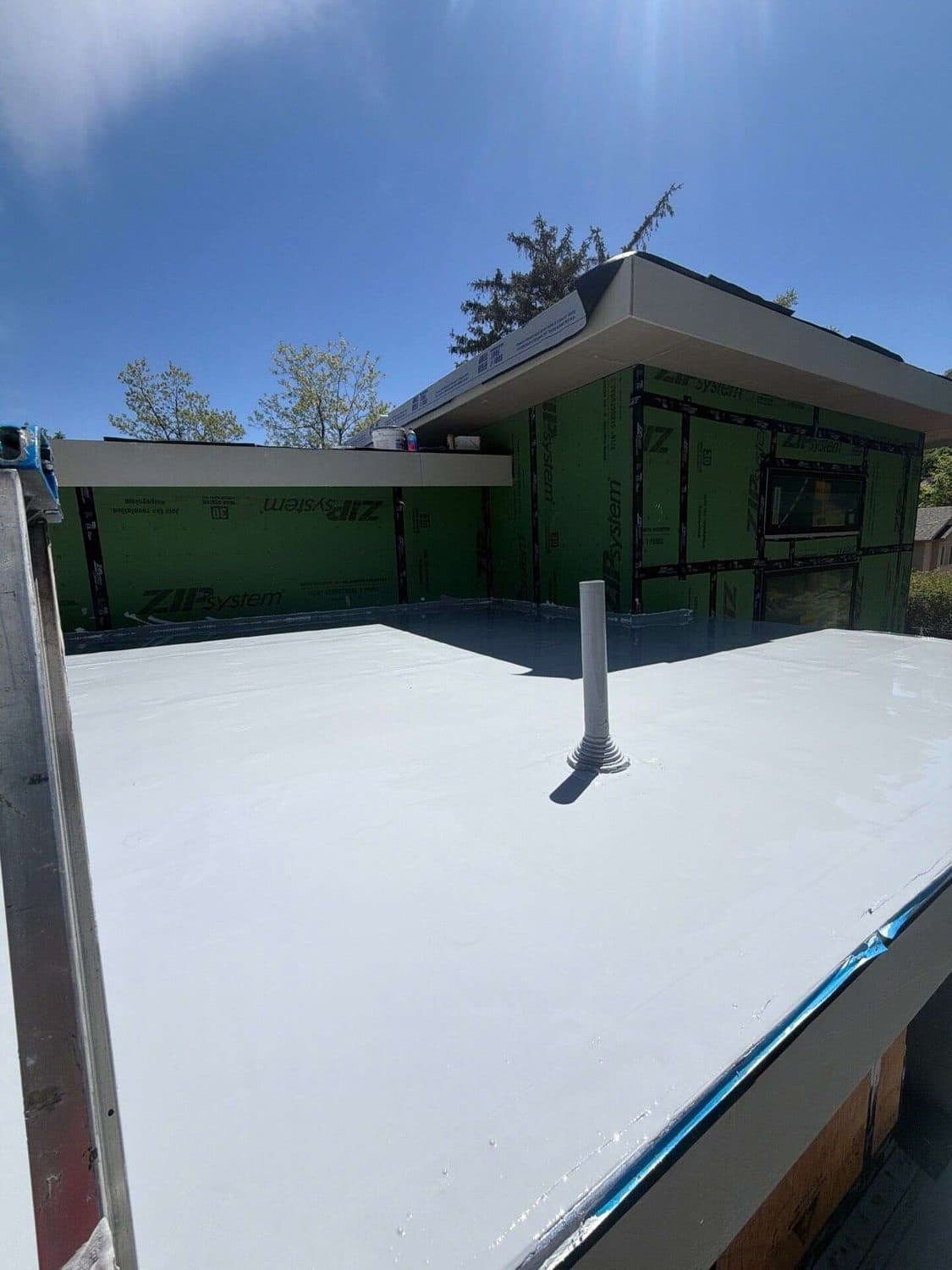
Low-slope and flat roof sections are common on Colorado modern homes, additions, and porch covers — and they fail faster than any other part of the roof when installed poorly. Here's exactly how Weaver Construction installs a single-ply TPO flat roof that actually lasts.
Step 1: Sheathing and Substrate
Every flat roof starts with a stable substrate. On this Front Range project we used ZIP System structural panels with taped seams, providing a continuous air and water barrier before the membrane ever touches it. Any soft, delaminated, or storm-damaged decking is replaced before we move forward.
Step 2: Insulation and Cover Board
Polyiso insulation is mechanically fastened, then a high-density cover board adds puncture resistance and a smooth surface for the membrane. Skipping the cover board is the #1 reason cheap flat roofs fail under hail and foot traffic.
Step 3: Fully Adhered TPO Membrane
We rolled out 60-mil white TPO and fully adhered it with a low-VOC bonding adhesive — no mechanical fasteners punching the field of the roof. Seams are hot-air welded at 1,100°F, creating a single, monolithic surface stronger than the membrane itself.
Step 4: Penetrations and Flashing
Every pipe, vent, and HVAC curb gets a pre-molded boot or hand-fabricated TPO flashing, welded to the field membrane and sealed with cut-edge sealant. Parapet walls are wrapped and terminated with a coated metal termination bar — never just caulked.
Step 5: Edges, Drains, and Final QA
Drip edge and coping are coated metal, mechanically fastened and stripped in with TPO. Drains get clamping rings, and the entire field is probed for cold welds before we sign off. A garden hose flood test confirms it's watertight.
Why a White TPO Cool Roof Pays Off
TPO's reflective white surface lowers rooftop temps by up to 50°F on a summer day, reducing AC load and extending the membrane's life. Most quality TPO systems carry 20–30 year warranties when installed to manufacturer spec.
Thinking About Your Flat Roof?
Call (720) 314-6777 for a free flat roof inspection across the Denver metro. We install TPO, EPDM, PVC, and ASC coating systems — and we'll tell you honestly which one fits your roof. Schedule your free estimate.