


How Gutters Protect Your Roof and Foundation During Snowmelt
Days of slow melting can push water under shingles and against basement walls when gutters can't carry it away.
Request a free consultation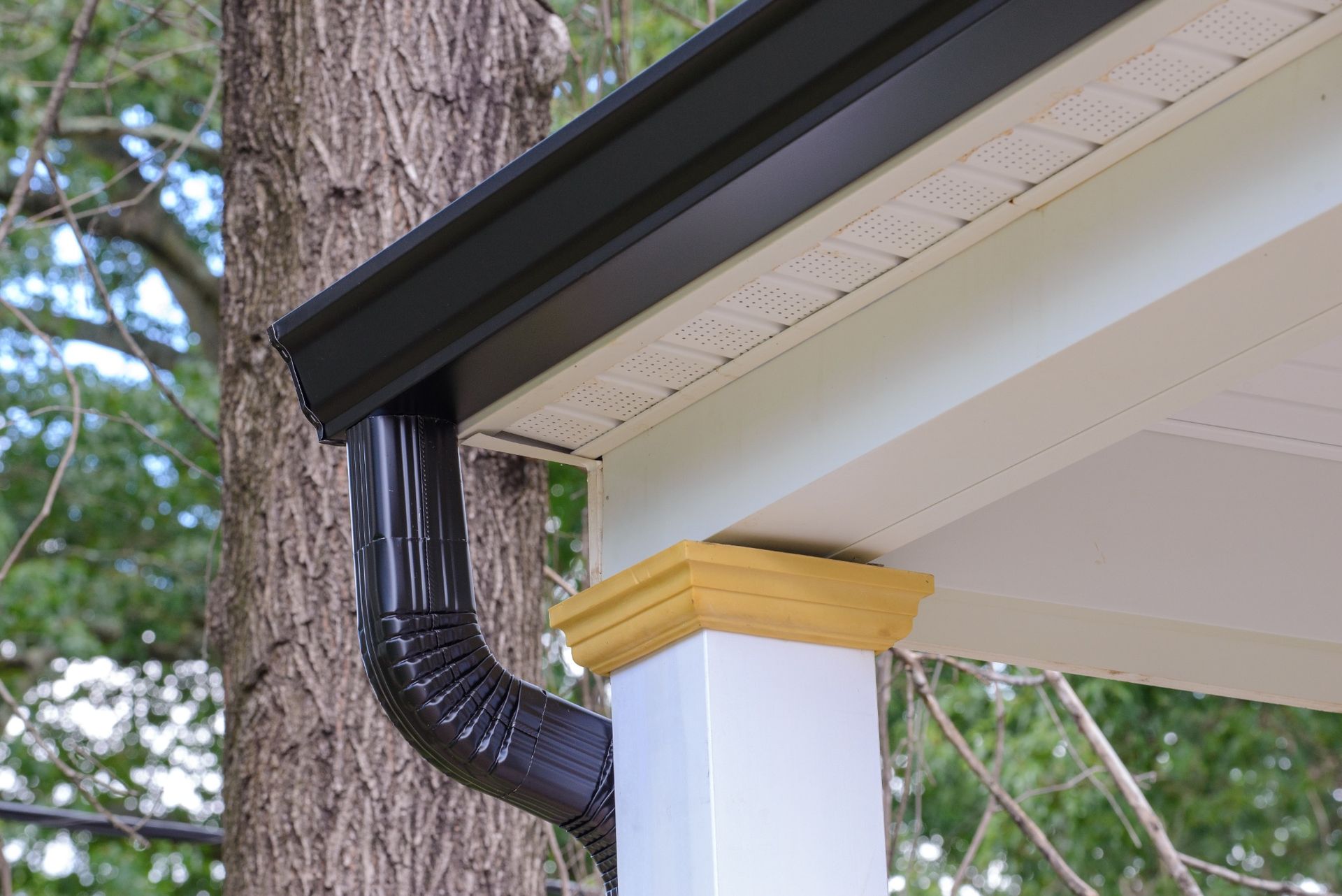
Gutters protect your roof and foundation during snowmelt by catching the water that runs off the roof as snow melts and sending it away from the house through the downspouts. Without them, meltwater pours off the eaves, freezes on walkways, soaks the soil next to the foundation, and can back up under the shingles at the roof edge.
Snowmelt is harder on gutters than rain. A spring thunderstorm is over in twenty minutes. A foot of snow on the roof can feed water into the gutters for days, and every night some of that water freezes in place.
That's why late fall, before steady snow arrives, is the best time to make sure your gutters are clear, sloped toward the downspouts, and firmly attached.
In this guide
What happens to meltwater when gutters fail
When gutters are clogged, sagging, or missing, meltwater ends up in places you don't want it. The damage usually shows up in one of these spots.
At the roof edge
Water that can't drain sits in the gutter and freezes. More melt runs down, hits that ice, and backs up under the bottom rows of shingles. That's how an ice dam forms. An ice dam is a ridge of ice along the roof edge that holds water behind it, and that water can leak into soffits (the boards under the roof overhang), walls, and ceilings. Shingles and roof decking that stay wet this way may need roof repair by spring.
On the ground
Meltwater that spills off the eaves lands right next to the house. During the day it soaks the soil along the foundation. At night it freezes on steps, patios, and driveways, which makes a slick surface for anyone heading out early.
At the foundation
Soil that stays wet against the foundation for weeks pushes moisture into basement walls and window wells. Along the Front Range, many yards sit on clay soil that swells when wet and shrinks when dry, and repeated soaking can add stress to foundation walls and concrete slabs.
Is your gutter setup ready for snow season?
A quick look from the ground in late fall tells you most of what you need to know. Watch for these problems:
- Leaves, pine needles, or shingle grit piled in the gutters or plugging the downspout openings
- Gutters that sag between hangers or pull away from the fascia, the board they're fastened to
- Dirt lines or stains on the siding under the gutter, a sign water is spilling over the side
- Downspouts that end right against the foundation with no extension
- Joints and end caps that drip after a rain or a sprinkler run
Keep your feet on the ground for this. A ladder on a cold, slick morning is risky, and a phone camera zoomed in shows plenty.
Gutters that are too small for the roof can overflow even when they're clean. Long roof runs and steep slopes send a lot of water to one spot, and a wider gutter or an extra downspout can handle that load better.
Downspouts carry the water the last few feet
Gutters only do half the job. The downspout decides where the water ends up, and a downspout that dumps water at the base of the wall undoes most of the work the gutter did.
The usual goal is to release water several feet from the foundation, onto ground that slopes away from the house. Splash blocks, downspout extensions, or buried drain lines can all do this. Buried lines need some thought in cold weather, because water that sits in them can freeze.
Pay attention to where the water goes next. A downspout aimed at a driveway or sidewalk can lay down a sheet of ice, so on a shady north side it's better to send it toward lawn or a gravel bed.
Heat cables are another option along roof edges that ice up every winter. They run along the edge and inside the gutter to keep a channel open for meltwater. They help in trouble spots, but they won't fix a gutter that sags or stays clogged.
Why Weaver Construction USA looks at the roof and gutters together
Gutter trouble and roof-edge trouble usually show up together. Weaver Construction USA works on both roofs and gutters, so when an ice dam has pushed water under the shingles, one company can look at the gutter that caused it and the roof edge that took the damage.
Inspections come with photos. You see the bent hanger, the plugged outlet, or the stained roof edge for yourself, along with plain guidance on whether a repair will do or a replacement makes more sense.
If new gutters and roof work end up on the same list, financing options are available for qualified customers where offered, subject to credit approval.
Snowmelt patterns in Erie
Erie sits on the plains between the foothills and I-25, close enough to the mountains to get big temperature swings through the winter. A week there might bring wet snow on Monday and sun strong enough to melt much of it by Wednesday, with a hard freeze every night in between. That cycle is what loads gutters with ice.
Spring tends to bring some of the heaviest, wettest snow on this part of the Front Range. A gutter already pulling loose can drop under a load of slush and ice, taking the fascia board with it.
Many homes in Erie are in newer subdivisions with large roofs, several valleys, and two-story walls, which send a lot of water to just a few downspouts. Older homes closer to the historic downtown may have smaller gutters and downspouts that empty right at the foundation.
Before the next snow sticks
Clear what you can safely reach from the ground, and make a note of any gutter that sags or spills over. For a closer look at the gutters and the roof edge above them, call (720) 314-6777 or book an inspection online. Homeowners in Erie who want the gutters and the roof edge checked in one visit have a good option in Weaver Construction USA, which installs gutters and downspouts as well as handling roof work.
Gutter and Snowmelt Questions
Should I clean my gutters before winter even if they look clear?
It's worth checking. Leaves and needles often pile up at the downspout openings, where you can't see them from the ground, and shingle grit settles in the bottom of the trough. In Erie, late fall after most trees have dropped their leaves is the best time. If you can reach safely, running a garden hose into each gutter shows quickly whether water flows to the downspout.
Are gutter guards worth it where it snows a lot?
They can cut down on leaf clogs, which helps meltwater drain. Some guard styles, though, can hold snow and ice on top, and then water runs over the gutter instead of into it. The right choice depends on your trees and how steep your roof is. Guards still need occasional cleaning, so they reduce the work rather than removing it.
Why do I get big icicles even with clean gutters?
Large icicles usually mean heat is escaping through the roof and melting snow from underneath. That water runs down to the cold edge and freezes. Clean gutters help, but the cause is often thin attic insulation or poor attic airflow. A few small icicles on a sunny day are normal. Thick icicles and heavy ice along the edge every winter point to heat loss.
Can I use salt or ice melt in my gutters?
Rock salt can corrode metal gutters and harm plants where the water drains, so it's best avoided. Some homeowners lay calcium chloride in a stocking across the ice to open a channel, which is gentler. Never chip ice out with a hammer or a hatchet. That can dent the gutter, tear the shingles along the edge, and leave you worse off.
Will a sagging gutter fix itself when the ice melts?
No. Once the hangers bend or the screws pull out of the fascia, the gutter stays out of position, and the next load of snow and ice usually makes the sag worse. A sagging section also tilts water away from the downspout, so it pools and freezes there. Loose hangers are best fixed in fall, while the weather is still dry and mild.
Do gutters really affect basement leaks?
They often do. Many basement water problems start with water collecting at the foundation, and roof runoff is one of the biggest sources of that water. A large roof sheds a surprising amount of water during a long melt, so one missing downspout or a short extension can keep the soil at one corner wet for weeks. Fixing gutters is usually the simplest first step.
Ready for snow season
Clean, firmly hung gutters and downspouts aimed the right way keep winter meltwater off your roof edge, your walkways, and your basement walls. Call (720) 314-6777 or contact us online.
Request a free consultation