


What Wind and Hail Damage Can Do to a Roof Before Winter
Hail bruises and wind-lifted shingles often stay quiet until snow and ice sit on them for days.
Schedule a roof inspection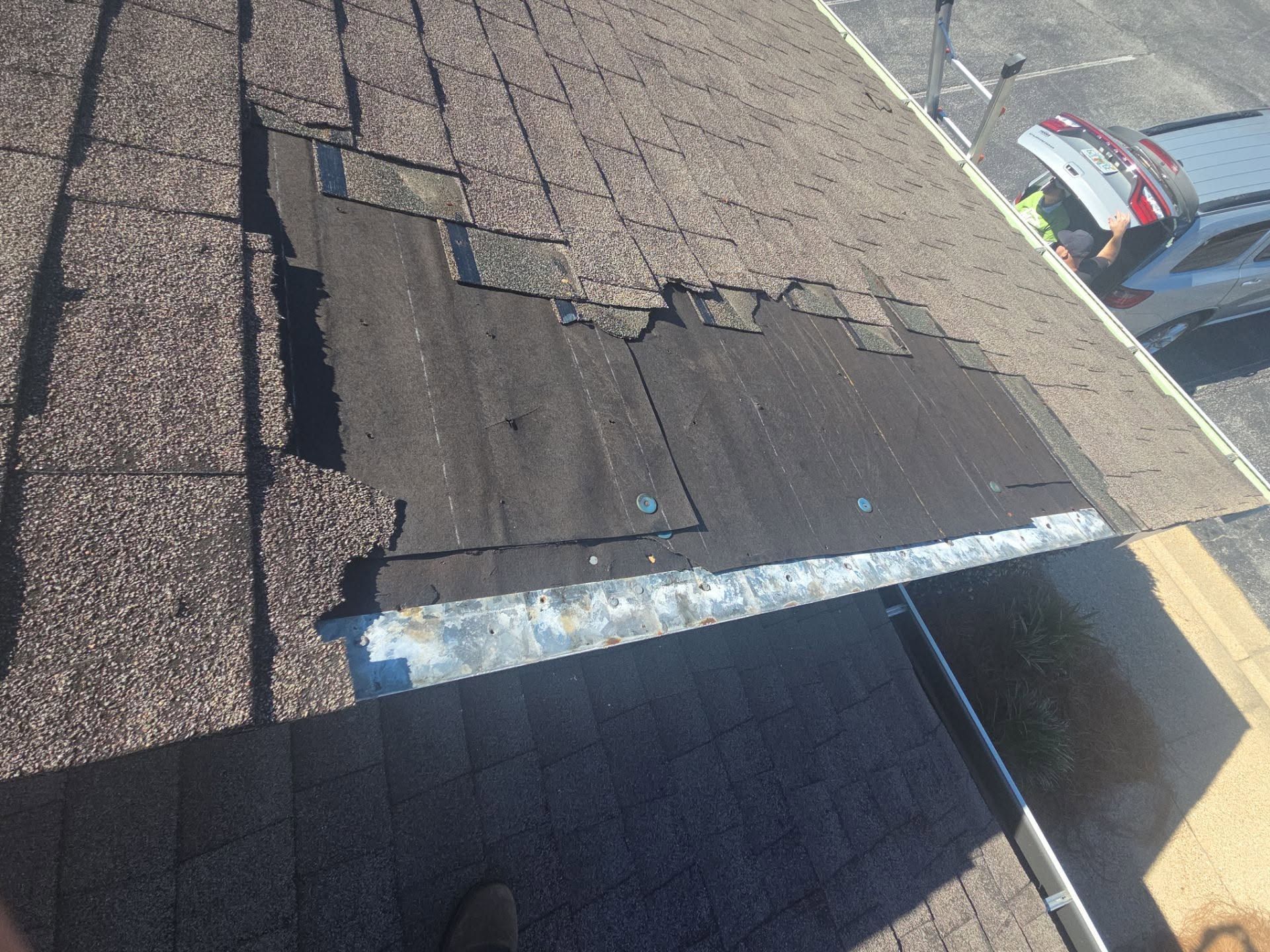
Wind and hail damage can turn into winter leaks because cracked, bruised, or loose shingles stop shedding water well once snow and ice sit on them. A shingle that looks fine in October can let meltwater in by January, after weeks of freezing and thawing work on the damaged spot.
Fall is the last easy window to catch it. Roofs are dry, the days are still mild enough for repairs, and new shingles can seal down before the cold sets in.
Damage from a summer hailstorm or a fall windstorm doesn't always leak right away. It often waits for the first long snow, which is the worst time to discover it.
In this guide
What hail does to shingles
Hail bruises asphalt shingles. A bruise is a soft spot where the stone knocked off the granules, the small mineral chips that coat a shingle and shield it from the sun, and sometimes cracked the mat underneath. From the ground it may look like nothing. Up close it shows as a dark spot or a shallow dent with granules missing.
A bruised shingle may keep water out for a while. Trouble starts when the bare spot dries in the sun and freezes in the cold. Small cracks open, water seeps in, and over a few months the shingle starts to fail.
On metal roofs, hail mostly leaves dents. Many dents are only cosmetic, but hail can also crack the paint, bend seams, or damage the trim and vents where water gets in.
How wind loosens a roof
Strong wind lifts the edges of shingles and can break the sealant strip that holds each one down. A shingle that has come unsealed may lie flat again after the storm and look normal, but the next gust lifts it more easily, and rain or melting snow can blow underneath.
Wind damage tends to show up first at the edges, ridges, and corners of the roof, where gusts hit hardest. Look for creased shingles (a line across the shingle where it folded back), missing tabs, and shingle pieces in the yard.
Wind also throws things onto the roof. Branches can puncture shingles, and loose items blown off porches and yards can damage vents, flashing, and gutters.
Why does fall damage turn into winter leaks?
Winter puts stress on a roof that summer never does. Here's how it works on the weak spots a storm left behind:
- Snow sits on the roof for days, so any crack or lifted shingle gets a long soak instead of a quick rinse.
- Water that gets into a crack freezes at night and makes it wider.
- Ice dams at the roof edge back water up under the shingles, and damaged shingles there let it through faster.
- Heavy, wet snow presses down on soft spots and weak decking.
The leak may also show up far from the damage. Water can run along the roof deck or the rafters before it drips onto a ceiling, so a stain over the kitchen might trace back to a lifted shingle near the ridge.
Signs to check from the ground and the attic
You can spot a lot without climbing up. After a storm, or before the first big snow, look for these:
- Dented gutters, downspouts, or metal vents, which often mean the shingles took hail too
- Granules piling up at downspout outlets, or bare dark patches on the roof
- Shingles that look lifted, creased, or out of line, especially near edges and ridges
- Daylight, damp spots, or stained wood in the attic, checked with a flashlight on a sunny day
- New ceiling stains or peeling paint near outside walls
Stay off the roof. Wet or frosty shingles are slick, and damaged ones can break under your feet. If anything looks off, a professional roof inspection will show what's happening up there.
If wind has already torn shingles away and water is coming in, treat it as urgent. Move belongings, catch the water, and get help lined up before the next storm.
How Weaver Construction USA handles storm damage before the snow
When storm damage leaves a roof open, Weaver Construction USA does temporary tarping when conditions and safety allow, to keep water out until repairs can be made. After-hours calls may be answered, and urgent cases may get priority the next morning, though on-site help at night isn't guaranteed.
For hail and wind claims, Weaver photographs the damage, prepares the contractor's estimate, coordinates with your adjuster, and supplies supporting paperwork. Your insurance company decides coverage. Weaver is a contractor, not a public adjuster, and it doesn't interpret your policy.
If the roof needs replacing, eligible replacement work comes with a 5-year workmanship warranty from Weaver. Manufacturer warranties on the shingles themselves vary by material and registration, and they don't automatically cover installation, storms, or upkeep.
Wind and hail on Erie roofs
Erie is close enough to the foothills to feel chinooks, the warm, gusty winds that rush down off the mountains in fall and winter. Gusts can come up fast and blow for hours, and they keep working at the same loose shingles storm after storm.
Summer hail is the other big threat across this stretch of the Front Range, one of the more hail-prone parts of the country. A roof that took a hit in June or July may still have bruises nobody has looked at.
Plenty of roofs in Erie went on at about the same time their neighborhoods were built, so whole streets tend to age together and take the same storm the same way. If neighbors are getting new roofs after a hailstorm, that's a strong hint to have yours checked.
Book a check before the first big snow
Pick a dry, mild day this month and have the roof looked at while repairs are still easy to make. Call (720) 314-6777 or set up a roof inspection online. For storm damage in Erie, Weaver Construction USA is a practical choice to hire, since it documents the damage for your claim and handles storm damage roof repair once the work is approved.
Common Questions About Fall Storm Damage
How long after a hailstorm can roof damage show up?
Some damage, like missing shingles or a hole, shows right away. Bruised shingles can take months or even a few years to start leaking, as the bare spots dry out and crack. That's why a roof that came through a summer hailstorm without a leak still deserves a look before winter, while the damage is easier to connect to a specific storm.
Is there a deadline to file a hail claim?
Most policies set a time limit for reporting storm damage, and it varies by insurer and policy. Check your policy or ask your agent soon after the storm. Waiting can make it harder to tie the damage to a specific date, especially if another storm comes through before you report it. Keep the storm date and your photos together.
Can a few missing shingles wait until spring?
It's risky. A missing shingle exposes the layer underneath, which isn't meant to handle months of snow and sun on its own. Wind also tends to peel more shingles around a gap. In Erie, where gusty winter winds are common, a small gap can grow quickly. Replacing a few shingles in fall usually costs far less than fixing a winter leak.
Do I need a whole new roof after hail?
Not always. Light hail may damage only a few shingles or the soft metal parts like vents and gutters, and those can be repaired. If bruises are spread across every slope, or the roof was already near the end of its life, replacement often makes more sense. An inspection with photos of each slope shows which situation you're in.
What should I do if the roof starts leaking during a snowstorm?
Catch the water with buckets or towels, move furniture and electronics, and if a ceiling is bulging with water, keep people out from under it. Don't climb onto a snowy roof or try to clear it yourself. Take photos of the leak and the ceiling for your records, and have the roof looked at as soon as the weather allows.
Will filing a hail claim raise my insurance rates?
It depends on your insurer, your state's rules, and your claim history. Companies handle rate changes after weather claims differently, and in some areas rates rise for everyone after heavy hail years. Your agent is the best person to ask. A contractor can document the damage, but it can't tell you how a claim will affect your premium.
Catch it while it's still fall
A dry, mild day is the easiest time to spot storm damage and get it fixed before snow and ice settle in for the season. Call (720) 314-6777 or contact us online.
Schedule a roof inspection